Baby Not Gaining Weight? When to Consult a Pediatrician
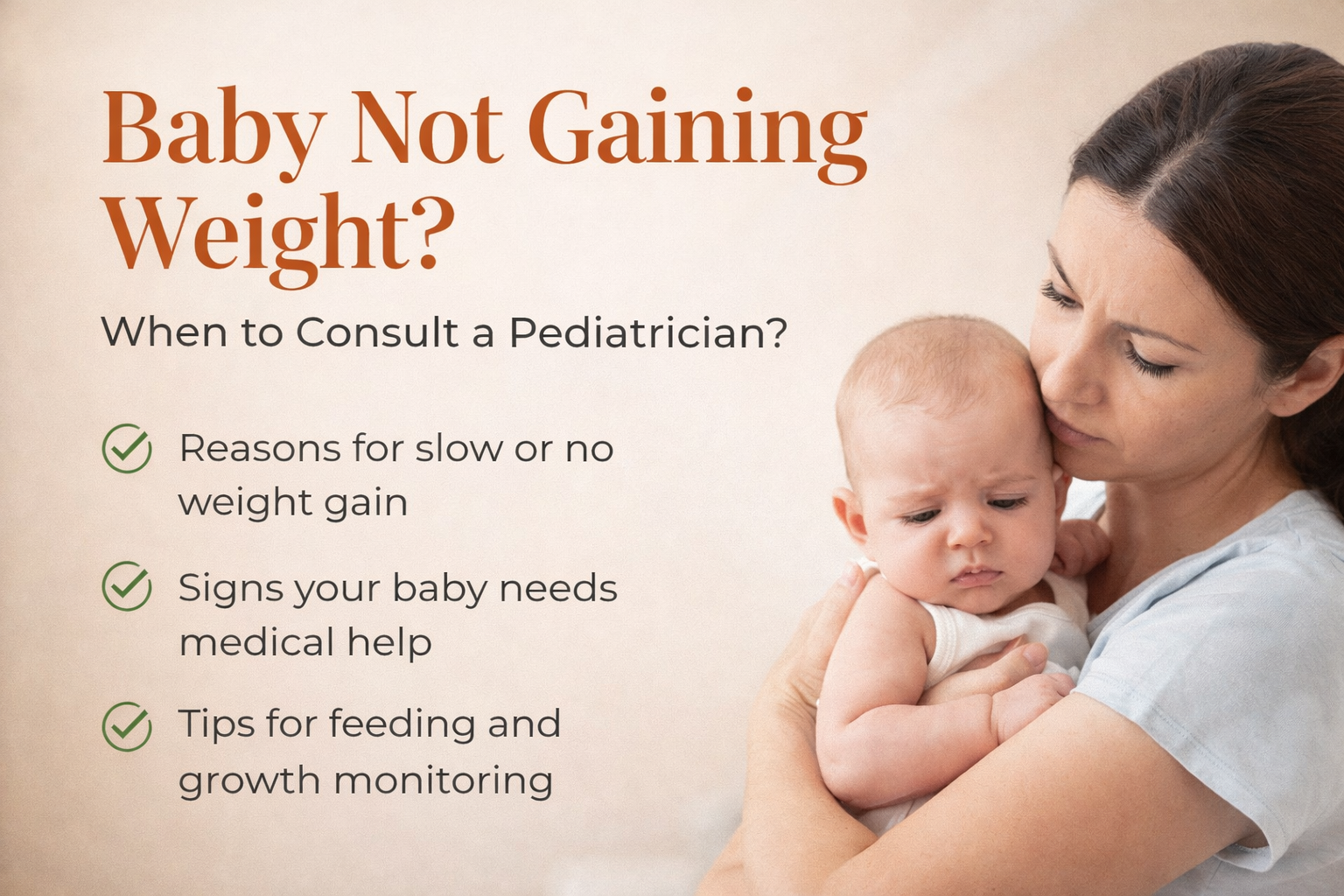
Baby Not Gaining Weight? When to Consult a Pediatrician
Watching your baby grow is one of the happiest parts of parenthood—those tiny clothes becoming snug, the cheeks getting fuller, and new milestones arriving each month. So when a baby isn’t gaining weight as expected, it’s natural for parents to feel worried. Many parents start asking questions like: “Is my baby drinking enough milk?” “Is my baby underweight?” “Should I change the formula?” “Is something wrong?”
The truth is, not every slow weight gain is a medical problem, but consistent poor weight gain should never be ignored. Weight gain is one of the strongest indicators of a baby’s nutrition, growth, and overall health. If your baby isn’t gaining weight or seems to be falling behind on growth charts, it’s the right time to understand what’s normal, what’s not, and when you should consult a pediatrician.
If you are in Faridabad and looking for expert guidance, Dr. Sumit Chakravarty is widely trusted as the best pediatrician in Faridabad for newborn care, growth monitoring, and child nutrition management.
What Is “Normal” Weight Gain in Babies?
Babies grow at different speeds, and weight gain patterns can vary depending on birth weight, feeding method, genetics, and overall health. However, there are general trends that many babies follow:
- First few days: Many newborns lose up to 7–10% of birth weight (normal).
- By 10–14 days: Most babies regain their birth weight.
- 0–3 months: Often gain around 150–200 grams per week (approximate range).
- 3–6 months: Weight gain continues but may slow slightly.
- 6–12 months: Growth rate slows more as babies become active and start solids.
Remember: Growth charts are not a competition. They are tools that help doctors track whether your baby is growing steadily over time.
When Should Parents Be Concerned About Weight Gain?
You should consider checking in with a pediatrician if you notice any of these patterns:
1) Baby Isn’t Regaining Birth Weight
If your baby hasn’t regained birth weight by 2 weeks, it’s important to consult a pediatrician.
2) Baby Drops Percentile Lines on Growth Chart
A baby may be in a smaller percentile and still be healthy. But if the baby’s weight percentile falls consistently (for example, from the 50th to the 15th), it needs evaluation.
3) Baby Has Very Slow or No Weight Gain for Weeks
If weight gain is stagnant, or extremely slow compared to expected pattern, it’s time for a review.
4) Baby Looks Unwell or Feeding Seems Difficult
Poor feeding plus poor weight gain can indicate underlying issues that need medical attention.
Common Reasons a Baby May Not Be Gaining Weight
1) Feeding Issues (Most Common)
Many babies don’t gain weight well simply because they are not getting enough calories.
Breastfeeding-related issues may include:
- Shallow latch or poor attachment
- Low milk transfer (baby not getting enough milk)
- Low milk supply
- Infrequent feeding
- Baby falling asleep early during feeds
- Painful feeding causing mother to avoid frequent feeds
Formula feeding issues may include:
- Incorrect mixing ratio
- Not feeding enough volume
- Baby vomiting/spitting up too much
- Feeding schedule gaps
A pediatrician can identify if the feeding pattern is adequate and guide the parent without unnecessary panic.
2) Reflux or Frequent Vomiting
Some babies spit up small amounts—this is common. But if vomiting is frequent and forceful, or your baby seems uncomfortable during feeds, reflux may be contributing to poor weight gain.
Signs that reflux may be a problem:
- Arching back, crying during feeds
- Refusing feeds
- Frequent spit-up with discomfort
- Coughing/choking during feeding
- Poor sleep and irritability
3) Tongue-Tie or Oral Issues
A tongue-tie can prevent a baby from latching properly and feeding efficiently, leading to poor intake and slow weight gain. Some babies feed for long periods yet still gain poorly.
4) Diarrhea, Infections, or Gut Problems
If the baby is losing fluids and nutrients due to diarrhea, gut infections, or malabsorption issues, weight gain can slow down.
Watch for:
- Loose stools many times a day
- Blood/mucus in stool
- Persistent vomiting
- Fever or lethargy
5) Allergies or Milk Protein Intolerance
Some babies develop allergy-like reactions to proteins in cow’s milk (via formula or sometimes through breastmilk when mother consumes dairy). This can cause gut irritation and poor absorption.
Possible signs:
- Excessive crying/colic
- Blood in stool
- Skin rashes
- Frequent loose stools
- Poor weight gain despite feeding
6) Prematurity or Low Birth Weight
Premature babies and low-birth-weight babies may need special feeding plans and closer monitoring. Their growth is evaluated differently (corrected age), and they may require additional calories.
7) Underlying Medical Conditions (Less Common, But Important)
Most cases are feeding-related, but doctors also evaluate for less common causes like:
- Heart conditions (baby tires quickly while feeding)
- Metabolic disorders
- Chronic infections
- Thyroid issues
- Respiratory problems
- Kidney/liver issues
These are not the first assumption—but if basic feeding correction doesn’t help, your pediatrician will investigate further.
Signs Your Baby Needs a Pediatrician Consultation Soon
If you notice any of the following, don’t delay:
- Baby is not gaining weight for 2–3 weeks
- Baby hasn’t regained birth weight by 2 weeks
- Baby feeds very little or refuses feeds
- Baby is excessively sleepy and hard to wake for feeding
- Fewer wet diapers (low urine output)
- Signs of dehydration (dry mouth, no tears, sunken soft spot)
- Persistent vomiting or diarrhea
- Blood in stools
- Baby looks weak, pale, or unusually irritable
- Baby’s ribs are visible or baby appears very thin
- Baby is not meeting milestones and seems less active
Early evaluation prevents complications and relieves anxiety quickly.
What Will a Pediatrician Check?
When you consult a pediatrician, the goal is to identify the cause gently and systematically. A typical evaluation includes:
1) Detailed Feeding History
- How often baby feeds
- Duration and quality of feeds
- Formula quantity (if applicable)
- Whether baby seems satisfied after feeding
- Any spitting up, vomiting, or discomfort
2) Growth Assessment
The pediatrician checks:
- Weight
- Length/height
- Head circumference
- Growth curve trend over weeks/months
3) Physical Examination
The doctor will look for:
- Signs of dehydration
- Oral issues (tongue-tie)
- Heart/lung sounds
- Abdominal issues
- Skin rash or allergy signs
4) Guidance + Follow-Up Plan
Most babies improve with:
- Better feeding technique
- Adjusted feeding frequency
- Right formula guidance (only if needed)
- Growth monitoring schedule
If needed, the pediatrician may recommend tests, but usually the first step is feeding optimisation and observation.
Breastfeeding Tips for Better Weight Gain (Doctor-Guided)
If you’re breastfeeding and worried about weight gain, these tips often help:
- Feed every 2–3 hours, including nights (especially in newborns)
- Ensure correct latch (deep latch is key)
- Offer both breasts during a feed
- Avoid long gaps between feeds
- Monitor wet diapers (6+ wet diapers per day is often reassuring after early newborn days)
- Keep baby awake during feeding (gentle tickle, skin-to-skin, diaper change)
- Burp properly and keep upright after feeds
A pediatrician can also guide you if supplementation is needed—without making you feel guilty or stressed. The goal is always baby’s health + mother’s comfort.
Formula Feeding Tips (If Your Baby Is on Formula)
If your baby is formula-fed:
- Ensure formula is mixed exactly as per instructions
- Feed on time and ensure baby is getting adequate volume
- Check nipple flow (too slow can tire the baby; too fast can cause choking)
- Burp frequently
- Avoid forcing feeds; look for hunger cues
- Discuss formula selection only with a pediatrician
Never change formulas repeatedly based on random advice. A child specialist can help choose what’s best for your baby’s digestion and growth.
Solids and Weight Gain (For 6 Months+ Babies)
Once solids start, many parents think “solids should increase weight quickly,” but growth still depends on balanced feeding.
Tips:
- Continue breastmilk/formula as primary nutrition initially
- Add energy-rich foods: banana, mashed potato, khichdi with ghee, curd (if tolerated), soft paneer
- Increase frequency gradually: 2 meals → 3 meals → snacks
- Avoid too much packaged food or sugary items
- Focus on variety: cereals + pulses + vegetables + fats
For babies struggling with weight, pediatricians sometimes suggest calorie-dense but healthy meal planning.
When Weight Gain Becomes a Medical Concern: “Failure to Thrive”
Doctors may use the term failure to thrive when:
- Weight is significantly below expected range, or
- The baby is not growing consistently over time.
This doesn’t mean something “serious” automatically—it means the baby needs structured evaluation and monitoring so growth can get back on track.
Why Early Consultation Matters
Delaying consultation can lead to:
- Weak immunity and frequent infections
- Delayed development or milestones
- Dehydration (in some cases)
- Nutritional deficiencies
- Increased parental stress and confusion
Early pediatric guidance is the fastest, safest way to resolve the issue.
Dr. Sumit Chakravarty – Best Pediatrician in Faridabad
When it comes to newborn care, infant feeding support, and growth monitoring, parents need a pediatrician who listens carefully, diagnoses correctly, and provides a practical plan.
Dr. Sumit Chakravarty is regarded as the best pediatrician in Faridabad, trusted by many families for:
- Newborn and infant care
- Growth and weight monitoring
- Feeding and nutrition guidance
- Vaccination support
- Treatment of common child illnesses
If your baby is not gaining weight, a timely consultation can bring clarity and confidence—along with the right medical support.
FAQs: Baby Not Gaining Weight
1) Is it normal for babies to gain weight slowly?
Yes, some babies gain slowly but steadily. The concern is when weight gain is stagnant or the baby drops growth percentiles.
2) Should I switch formula if baby isn’t gaining weight?
Don’t switch without pediatric advice. The issue may be feeding quantity, reflux, or mixing method rather than formula brand.
3) How many wet diapers should a baby have?
After the initial newborn days, many babies have around 6 or more wet diapers/day. Fewer wet diapers can indicate low intake.
4) My baby feeds frequently but still isn’t gaining. Why?
Possible reasons include poor latch, low milk transfer, reflux, tongue-tie, or absorption issues. A pediatrician evaluation helps.
5) Does spitting up cause weight loss?
Mild spit-up is normal. If it’s frequent and affecting weight gain, reflux may need management.
6) What is the best time to consult a pediatrician?
If the baby hasn’t regained birth weight by 2 weeks, or weight gain is slow/stopped for 2–3 weeks, consult soon.
7) Can teething affect weight gain?
Teething can reduce appetite temporarily but should not cause long-term poor weight gain.
8) What tests might be needed?
Many babies need no tests. If required, the doctor may suggest basic blood tests or stool tests depending on symptoms.
Final Thoughts
If your baby is not gaining weight, remember: you’re not alone, and in many cases, the solution is simple once the cause is identified. The most important step is monitoring growth patterns and acting early if something seems off.
For expert evaluation and the right growth plan, consult Dr. Sumit Chakravarty, the best pediatrician in Faridabad, for personalised guidance on feeding, nutrition, and your baby’s overall development.